Solar wall lights offer a sustainable lighting solution for outdoor spaces, leveraging solar energy to illuminate pathways, gardens, and entryways. However, many users face issues with their devices not functioning as intended. A common question arises: "Why is my solar wall light not turning on at night?" Understanding the reasons behind this problem can empower homeowners to make informed decisions about their lighting solutions.
According to a recent industry report by the Solar Energy Industries Association, solar lighting systems have grown by over 30% in the last five years. This growth indicates an increasing reliance on solar technology. Yet, despite advancements, many consumers experience performance issues with solar wall lights. Factors such as inadequate sunlight exposure, dirty panels, and battery issues often contribute to these problems. Users may overlook simple maintenance steps or installation angles that can impact performance.
Many solar wall lights, on average, require direct sunlight for at least six hours daily to function effectively. Neglecting this crucial aspect might lead to frustrations come nightfall. It’s essential to regularly check your solar lights for debris and orientation to maximize efficiency. As much as solar lights are designed for ease of use, achieving optimal performance demands attention to detail and regular maintenance.
Common Reasons Solar Wall Lights Fail to Turn On at Night
Solar wall lights are a popular choice for outdoor illumination. However, many users face a common issue: the lights do not turn on at night. Understanding the reasons for this can help troubleshoot the problem effectively.
One of the primary causes is insufficient sunlight during the day. If the solar panel does not receive enough light, it cannot store enough energy. Shadows from trees or buildings can greatly impact performance.
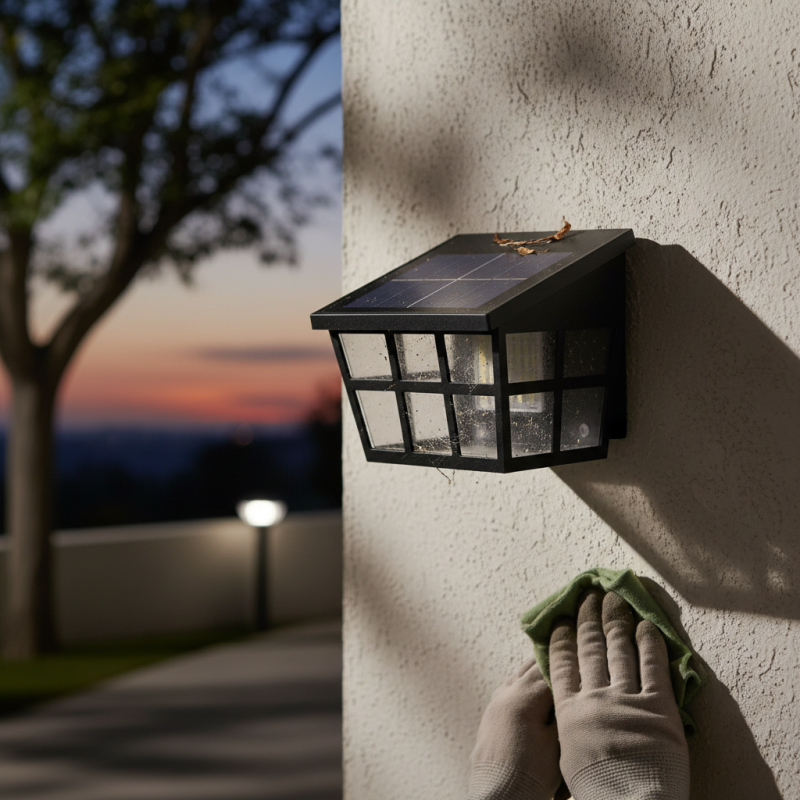
Another possibility is a dirty solar panel. Dust and debris can block sunlight, decreasing charging efficiency. Be sure to clean the panel regularly for maximum performance.
Battery issues can also lead to malfunction. Over time, batteries can lose their ability to hold a charge. In some cases, replacing the battery may be necessary. Additionally, check the settings of the light. If it has a control mode switch, it may be set incorrectly. This might prevent the light from functioning.
Regular maintenance is key to keeping these lights operational. Addressing these factors can ensure your solar wall lights shine brightly at night.
Impact of Solar Panel Orientation and Placement on Performance
When your solar wall light fails to illuminate at night, it often links back to the orientation and placement of its solar panel. Solar lights require direct sunlight to maximize energy absorption. According to industry reports, panels positioned at a 30 to 45-degree angle capture up to 25% more sunlight than those placed flat. Proper orientation ensures optimal energy gathering during the day, which translates into brighter lights at night.
Placement matters significantly too. Lights should ideally be installed in locations free from shade. A recent study revealed that even partial shading from a nearby tree or structure could decrease solar panel performance by as much as 50%. It’s crucial to assess your environment for potential obstructions. If the light isn't consistently turning on, it may be underperforming due to ineffective placement. Adjusting the location can yield visible improvements.
Regular maintenance can further enhance functionality. Clean solar panels frequently to remove dust and debris. Dirty panels reflect sunlight and diminish energy intake. Some users overlook this simple step. It’s easy to assume that sunlight alone will suffice, but neglecting maintenance can lead to frustrating experiences.
Battery Issues Affecting Nighttime Functionality of Solar Lights
If your solar wall light isn’t turning on at night, battery issues are often the culprit. Solar lights rely on rechargeable batteries to store energy gathered during the day. If these batteries are weak or malfunctioning, the light may not work at night. Ensure you have quality batteries. Over time, even the best batteries degrade.
Check how long it takes for your lights to charge. Insufficient sunlight can lead to inadequate charging. This is especially true during cloudy days or in shaded areas. You may need to relocate your lights for optimal sunlight exposure. Also, consider that dirt and debris on solar panels can hinder performance. Cleaning the panels regularly might enhance functionality.
Another factor is temperature. Extreme temperatures can affect battery life. Cold nights can reduce charging capacity. Similarly, excessive heat can also damage the batteries. If your solar light only works intermittently, it may be time to assess the overall condition of the batteries. Sometimes, a simple replacement can bring your light back to life.
Battery Performance Comparison of Solar Wall Lights
This chart illustrates the declining battery voltage of solar wall lights over five weeks. A drop in voltage can indicate battery issues that may affect nighttime functionality.
Environmental Factors that May Prevent Solar Lights from Activating
Solar wall lights rely on sunlight for power. At night, they should illuminate your spaces. If they don’t, environmental factors might be the culprit.
Cloudy days reduce sunlight exposure. Prolonged overcast conditions can limit energy storage. If your area experiences heavy rainfall or snow, your solar panel can also be obstructed. Dust, dirt, or debris on the solar panel surface can block sunlight. Regular cleaning can help maintain efficiency.
Temperature also plays a role. Extremely low temperatures may affect the battery's performance. Batteries often struggle in colder climates, failing to hold a charge. If you notice your lights dimming, check the battery's condition. Replace old batteries to restore functionality. Taking these environmental factors into account can help you understand your solar wall light's performance.
How to Troubleshoot and Maintain Your Solar Wall Light System
Solar wall lights offer a convenient way to illuminate outdoor spaces. However, they can sometimes fail to turn on at night. Troubleshooting this issue requires a systematic approach. Start by checking the solar panel. Ensure it’s clean and placed where it receives adequate sunlight during the day. Shadows from trees or structures can limit sunlight and affect performance.
Another common issue is the battery. Over time, batteries can wear out or lose their ability to hold a charge. Replace them if they show signs of depletion. Additionally, inspect the light sensors. Dust or debris can obstruct them, leading to malfunction. Regularly maintaining these components ensures the solar light functions effectively.
Consider adjusting the angle of the solar panel for optimal sun exposure. Sometimes improper installation limits the light's efficiency. While troubleshooting, be patient and observant. Note any patterns in the light’s performance. This can reveal underlying issues that might need attention. Reflect on these processes as part of maintaining a reliable solar wall light system.
Why Is My Solar Wall Light Not Turning On at Night? - How to Troubleshoot and Maintain Your Solar Wall Light System
| Issue |
Possible Cause |
Solution |
| Light does not turn on |
Battery is discharged |
Recharge battery by placing in direct sunlight for a full day |
| Light turns on briefly |
Poor battery connection |
Check and secure battery connections |
| Light flickers or dims |
Dirty solar panel |
Clean solar panel with a soft cloth |
| Light is dim |
Insufficient sunlight exposure |
Relocate light to a sunnier spot |
| Light does not turn off |
Faulty light sensor |
Replace the light sensor |
Conclusion
If you're wondering, "Why is my solar wall light not turning on at night?" there are several common factors that could be affecting its performance. One primary reason may be improper orientation or placement of the solar panel, which can significantly reduce its ability to absorb sunlight. Additionally, battery issues such as age or insufficient charge can prevent the light from functioning after dark.
Environmental factors like excessive shade, cloudy weather, or dirt and debris on the solar panel can also hinder activation. To troubleshoot and maintain your solar wall light system, regularly clean the panels, check the battery condition, and ensure adequate sunlight exposure to optimize performance. Understanding these elements can help you restore functionality to your solar lights, ensuring they illuminate your space as intended.

 LuxPower Light